

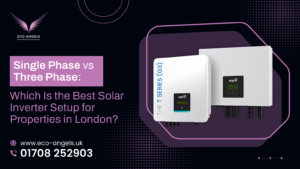
Single Phase vs Three Phase: Which Is the Best Solar Inverter Setup for Properties in London?
When choosing a solar installation for a London property, homeowners need to look beyond brand or output rating. One of the first questions any experienced
Secure Next Day Delivery
Fully tracked consignments
Free Collection
Discover Our Free Store Collection
Trade accounts
Exclusive trade benefits
Secure Next Day Delivery
Fully tracked consignments
Free Collection
Discover Our Free Store Collection
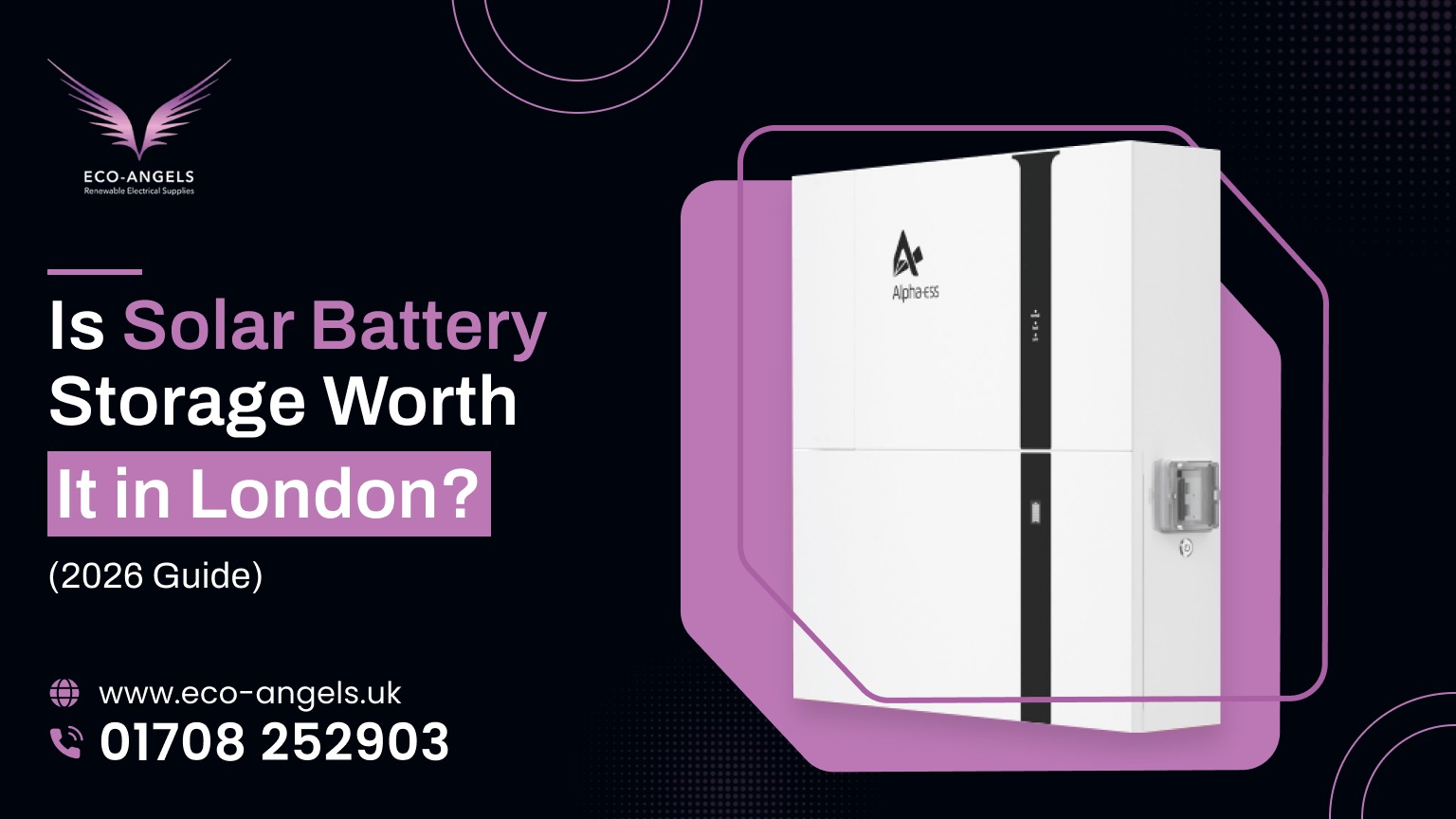
If you already have solar panels on your roof, or if you are considering getting them, choosing the right solar battery storage in London is worth serious consideration. But batteries won’t make financial sense for every household. In this guide, we outline the pros and cons of solar battery storage in London in 2026 and answer the pressing question: are they really worth it?
The short answer is that it can be worthwhile for many London homeowners, particularly those with solar panels, higher electricity consumption, or a suitable time-of-use tariff. However, the potential benefits depend on your system, energy use, tariff, and installation costs.
Solar panels generate electricity during daylight hours, but household demand does not always coincide with solar generation. Without battery storage, surplus electricity is exported to the grid, while additional electricity may need to be imported later when your panels are producing less.
A solar battery stores surplus electricity generated by your panels so you can use it later — such as in the evening or overnight. This can increase the proportion of your solar generation that you use yourself and reduce your reliance on grid electricity.
A battery can make better use of an existing solar installation, although the financial benefit depends on how much surplus electricity you generate and when your household uses energy.
London’s weather is variable, but a well-designed solar array can still generate useful electricity throughout the year. Solar output varies considerably depending on factors such as roof orientation, shading, system size, season, and weather conditions.
The key issue for many households is not simply how much electricity their panels generate, but when that electricity is generated and when it is needed. Battery storage can help bridge that gap by storing surplus daytime generation for later use.
Your electricity tariff can also affect the value of a battery. Dynamic and time-of-use tariffs, such as Octopus Agile, allow electricity prices to vary according to the time of day. Where the tariff structure is suitable, a battery can be charged when electricity is cheaper and discharged when grid electricity costs more.
Tariff prices and terms change, so potential savings should always be assessed using your current tariff rather than assumed future rates.
The financial case for solar battery storage in London depends on your individual circumstances. Installation cost, battery capacity, solar generation, household consumption, electricity prices, and export payments can all affect the potential return.
A typical residential battery installation can cost around £2,500 – £8,500 in 2026, although the final price depends on battery capacity, installation requirements, inverter configuration, and whether the system is being added to existing solar panels. Smaller systems generally sit towards the lower end of this range, while larger-capacity systems cost more.
Several factors affect the potential savings:
Battery lifespan varies according to factors including battery chemistry, usage, operating conditions, and the manufacturer’s specifications. Warranties also differ between products, so it is important to check the manufacturer’s warranty terms, including any cycle or throughput limits, before purchasing.
Many modern battery systems include monitoring and energy-management features that allow you to track battery performance and household energy use.
Solar panels are not a prerequisite for installing a battery. Standalone battery systems can be charged from the grid during lower-priced periods and discharged when electricity prices are higher.
This type of tariff arbitrage can provide savings where the difference between charging and discharge prices is sufficient to outweigh battery losses, degradation, and other costs. However, the economics depend heavily on the tariff and battery system, so it should be assessed on an individual basis.
For households with solar panels, combining generation and storage offers an additional potential benefit: surplus solar electricity generated during the day can be stored for later use rather than immediately exported.
Many residential properties can accommodate modern battery storage systems, but suitability depends on the property, electrical installation, and manufacturer’s requirements.
Key considerations include:
There are now many established battery manufacturers offering residential storage systems in the UK. The right choice depends on factors such as capacity, inverter compatibility, warranty terms, monitoring features, installation requirements, and overall cost.
Fox ESS, GivEnergy, Qcells, Growatt, and Hanchu ESS are among the manufacturers whose battery storage products are available through Eco Angels. (Note for publisher: verify current product availability before publishing.) Availability varies between products, so it is worth checking which systems are currently stocked.
Rather than choosing a battery based solely on brand, consider the specifications of the particular model, including usable capacity, warranty, efficiency, maximum charge, and discharge rates, compatibility with your existing equipment, and available support. The most suitable option for your property should be based on your energy consumption, solar generation, and electrical setup.
Solar battery storage is not automatically the right choice for every property, but it can offer meaningful benefits for many London households. If you already have solar panels, a battery can help you use more of your own generation and reduce the amount of electricity you need to buy from the grid.
The financial case depends on your electricity tariff, energy consumption, solar generation, export payments, and the total cost of installation. A system-specific assessment is therefore more useful than relying on a standard payback period.
If you are considering battery storage, Eco Angels supplies a range of battery systems and can help you assess the options for your property.
Browse our battery range
When choosing a solar installation for a London property, homeowners need to look beyond brand or output rating. One of the first questions any experienced

Rising electricity costs and growing interest in reducing household carbon emissions have encouraged more homeowners to consider home solar panels in London. From Victorian terraces